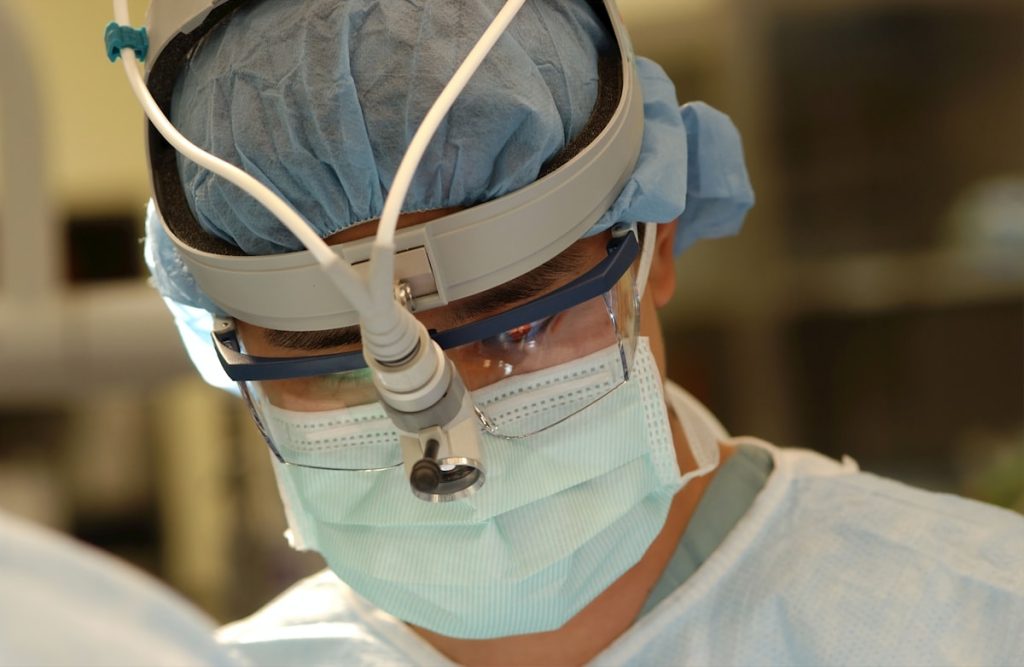
If sleeve gastrectomy alone is not the right fit for your case — or if you need a more powerful procedure for severe obesity, type 2 diabetes, or a failed previous weight loss surgery — gastric bypass is likely the answer. At Slim Expert in Lahore, Prof. Maaz Ul Hassan performs both the One Anastomosis Gastric Bypass (OAGB/MGB) and the full Roux-en-Y Gastric Bypass (RYGB), as well as his own internationally recognized variation, the Maaz Modification of RYGB (MMRYGB).
What is gastric bypass surgery?
Gastric bypass surgery is a weight loss procedure that works in two ways simultaneously: it reduces the size of the stomach so you feel full quickly, and it reroutes part of the digestive system so fewer calories are absorbed. Unlike sleeve gastrectomy, which only restricts how much you can eat, gastric bypass also changes the way your body processes food — making it one of the most powerful and metabolically effective bariatric procedures available.
The procedure is performed laparoscopically — through small keyhole incisions — which means faster recovery, less pain, and smaller scars compared to open surgery. It has been performed worldwide for decades and is backed by the strongest long-term evidence of any bariatric procedure for sustained weight loss and resolution of obesity-related conditions, particularly type 2 diabetes.
Types of gastric bypass performed at Slim Expert
1. OAGB / Mini Gastric Bypass (MGB)
The One Anastomosis Gastric Bypass — also known as the Mini Gastric Bypass (MGB) — is Prof. Maaz’s most commonly recommended bypass procedure. A long, narrow gastric pouch is created and connected directly to the small intestine approximately 150 to 200 cm from the stomach — bypassing a significant portion of the intestine and reducing calorie absorption. Unlike the full RYGB, OAGB requires only one surgical connection (anastomosis) rather than two, which reduces operating time and lowers the risk of certain complications.
- Operating time: 60–90 minutes (vs 120+ for RYGB)
- Anastomoses: 1 (simpler and faster than RYGB)
- Excess weight loss at 12 months: 70–80%
- Type 2 diabetes remission: 70–85%
- Reversible: Yes (can be converted to RYGB if needed)
2. Roux-en-Y Gastric Bypass (RYGB) — The Gold Standard
The Roux-en-Y Gastric Bypass is widely considered the gold standard of bariatric surgery. A small stomach pouch (approximately 30 ml) is created and connected to the middle portion of the small intestine, bypassing the lower stomach and first part of the intestine entirely. Because of the way the intestine is rerouted, bile and digestive juices from the bypassed segment cannot reflux into the new pouch — making RYGB the superior choice for patients with pre-existing acid reflux or GERD.
- Operating time: 90–150 minutes
- Anastomoses: 2 (more complex than OAGB)
- Excess weight loss at 12 months: 70–80%
- Type 2 diabetes remission: 65–80%
- GERD/acid reflux: Best option for pre-existing reflux
3. MMRYGB — The Maaz Modification
The Maaz Modification of Roux-en-Y Gastric Bypass (MMRYGB) is Prof. Maaz Ul Hassan’s own internationally recognized surgical innovation — a refined variation of the standard RYGB that addresses specific limitations of both traditional RYGB and OAGB. It is one of the reasons patients travel from the UK, USA, and Gulf specifically to have their bypass performed by Prof. Maaz. The MMRYGB is particularly indicated for patients requiring revision surgery, complex anatomical situations, and cases where maximum long-term metabolic outcome is the priority.
OAGB vs RYGB — which is right for you?
- OAGB: Most patients, shorter procedure, easier reversal, slightly stronger diabetes effect
- RYGB: Pre-existing GERD, revision cases, longest evidence base
- MMRYGB: Complex cases, maximum metabolic outcome priority
Prof. Maaz will assess your full medical history, BMI, co-morbidities, and any previous surgeries before making a recommendation.
How gastric bypass produces weight loss
1. Physical restriction
The new stomach pouch holds only 30 to 60 ml of food at a time. You feel full after a very small amount of food, and your calorie intake falls dramatically.
2. Malabsorption
By bypassing a portion of the small intestine, gastric bypass reduces the amount of calories, fats, and nutrients your body can absorb from the food you eat.
3. Hormonal and metabolic change
Rerouting the digestive tract triggers powerful hormonal changes — including changes in gut hormones such as GLP-1, GIP, and peptide YY. These changes reduce hunger, improve insulin sensitivity, and can produce dramatic improvements in type 2 diabetes — sometimes within days of surgery, before significant weight loss has even occurred.
The gastric bypass procedure — what to expect
Pre-operative assessment (2 to 4 weeks before surgery)
- Full blood panel: complete blood count, liver and kidney function, thyroid, HbA1c, lipid profile, coagulation screen
- Upper GI endoscopy to assess for reflux, ulcers, polyps, or H. pylori infection
- Cardiac evaluation including ECG and, where indicated, echocardiogram
- Pulmonary function testing for patients with sleep apnoea or respiratory concerns
- Nutritional assessment and dietitian counselling
- Psychological evaluation to confirm readiness
The surgery itself (60 to 150 minutes)
Gastric bypass is performed under general anaesthesia using a fully laparoscopic approach — five small incisions of approximately 1 cm each. Prof. Maaz creates the new gastric pouch and performs the intestinal connections with precision. A leak test is performed at the end of the procedure to confirm all connections are secure.
In-hospital recovery (2 to 4 nights)
Most patients spend 2 to 4 nights in hospital after gastric bypass. Pain is well managed with IV medication; clear fluids begin within 24 hours; a physiotherapist guides early movement; blood thinning injections are administered throughout.
Recovery — week by week
- Week 1: Rest at home. Clear fluids only. Mild soreness. Short gentle walks. No driving.
- Weeks 2–3: Full liquids: protein shakes, smooth yoghurt, blended soups. Light desk work can resume.
- Weeks 4–6: Soft and pureed foods. Most patients feel significantly better.
- Weeks 6–8: Soft solids introduced. Most patients return to office-based work.
- 3 months: Normal foods reintroduced in small portions. Rapid, visible weight loss continues.
- 6–12 months: Peak weight loss period. Lifestyle habits established.
Diet and nutrition after gastric bypass
Because of the malabsorptive component of gastric bypass, lifelong vitamin and mineral supplementation is essential — more so than after VSG. You will need: a high-potency multivitamin, vitamin B12 (sublingual or injected), vitamin D3, calcium citrate, iron, and possibly zinc. Blood tests at every follow-up appointment allow supplements to be adjusted as needed.
Expected results from gastric bypass
- Excess weight loss: 70–80% within 12 to 18 months
- Total body weight loss: 30–40% on average
- Type 2 diabetes: 65–85% see significant improvement or full remission
- Hypertension: 55–70% reduction in BP medication within 12 months
- Sleep apnoea: Significant improvement or resolution in most patients
- GERD / acid reflux: Usually resolves after RYGB
- 5-year maintenance: 60–70% excess weight loss with correct habits
Risks and complications
Short-term risks (within 30 days)
- Anastomotic leak: approximately 1–2% of cases. Symptoms include fever, rapid heart rate, abdominal pain.
- Bleeding: rare, usually resolves without intervention.
- Blood clots (DVT/PE): prevented through blood thinning, compression stockings, early mobilization.
- Anastomotic stricture: can occur in a small number of patients; treated with endoscopic dilation.
Long-term considerations
- Nutritional deficiencies: lifelong supplementation and regular blood monitoring are mandatory.
- Dumping syndrome: nausea, sweating, or diarrhoea after sugary or high-fat foods. Managed through dietary adjustment.
- Biliary reflux (OAGB): if significant, conversion to RYGB resolves this.
- Internal hernia (RYGB): rare, but requires prompt surgical attention.
Why choose Prof. Maaz Ul Hassan?
- 12,000+ bariatric and laparoscopic surgeries — highest volume in Pakistan
- 28+ years of exclusive specialization in obesity, metabolic, and bariatric surgery
- Pioneer of the MMRYGB — recognized internationally
- International training: FCPS (Pakistan), FLS (USA), Diploma in Laparoscopic Surgery (France)
- Professor of Surgery at Shalamar Institute of Health Sciences
- Patients travel from Karachi, Islamabad, Peshawar, UK, USA, and Gulf for his expertise
Frequently Asked Questions
How long does gastric bypass surgery take?
OAGB/Mini Gastric Bypass typically takes 60 to 90 minutes. Full RYGB takes 90 to 150 minutes. Most patients spend 2 to 4 nights before discharge.
Can gastric bypass cure type 2 diabetes?
Yes — gastric bypass is the most effective surgical treatment for type 2 diabetes among all bariatric procedures. Between 65 and 85 percent of patients experience significant improvement or complete remission, often within days or weeks of surgery — before major weight loss has occurred.
What is the difference between OAGB and RYGB?
OAGB involves one surgical connection and is faster than RYGB while delivering comparable weight loss results. RYGB involves two connections and is preferred for patients with pre-existing acid reflux or GERD.
How soon can I return to work after gastric bypass?
For desk-based or office work, most patients return within 2 to 3 weeks. Physically demanding jobs typically require 5 to 6 weeks.
How much weight will I lose?
Most patients lose 70 to 80 percent of their excess body weight within 12 to 18 months. Total body weight typically reduces by 30 to 40 percent.
Ready to take the first step? Book your consultation
If you are considering gastric bypass and want to speak directly with Pakistan’s most experienced bariatric surgeon, book a consultation with Prof. Maaz Ul Hassan today.
Call / WhatsApp: 0305-9738995
Email: maazul.hassan@sihs.org.pk
Book a consultation: Patient portal · +92 329 166 4350